Safety During Protective Coating Application: Why It Matters
Safety during protective coating application is one of the most critical aspects of industrial maintenance. Whether coatings are applied to tanks, pipelines, pressure vessels, structural steel, or process equipment, following proper safety procedures helps prevent workplace accidents, injuries, equipment damage, and costly production downtime.
Protective coating work often involves surface preparation, abrasive blasting, solvent-based materials, confined spaces, and specialized equipment. Without adequate safety measures, workers may be exposed to hazardous dust, toxic fumes, fire risks, explosions, and falls.
A comprehensive safety program protects employees, safeguards valuable assets, ensures regulatory compliance, and improves the overall success of coating projects.
Why Safety During Protective Coating Application Is Important
Industrial coating operations involve several hazards that can affect personnel, equipment, and the environment. A well-planned safety strategy helps:
- Prevent fatalities and serious workplace injuries
- Minimize equipment and property damage
- Reduce production losses caused by accidents
- Ensure compliance with occupational safety regulations
- Improve coating quality through controlled work conditions
- Protect the environment through proper waste handling
- Increase workforce productivity and operational reliability
Every coating project should begin with a detailed risk assessment before any work starts.
Safety During Surface Preparation
Surface preparation is one of the most hazardous stages of any protective coating project. Activities such as abrasive blasting, grinding, power-tool cleaning, and high-pressure water jetting generate dust, flying particles, and high noise levels.
Personal Protective Equipment (PPE)
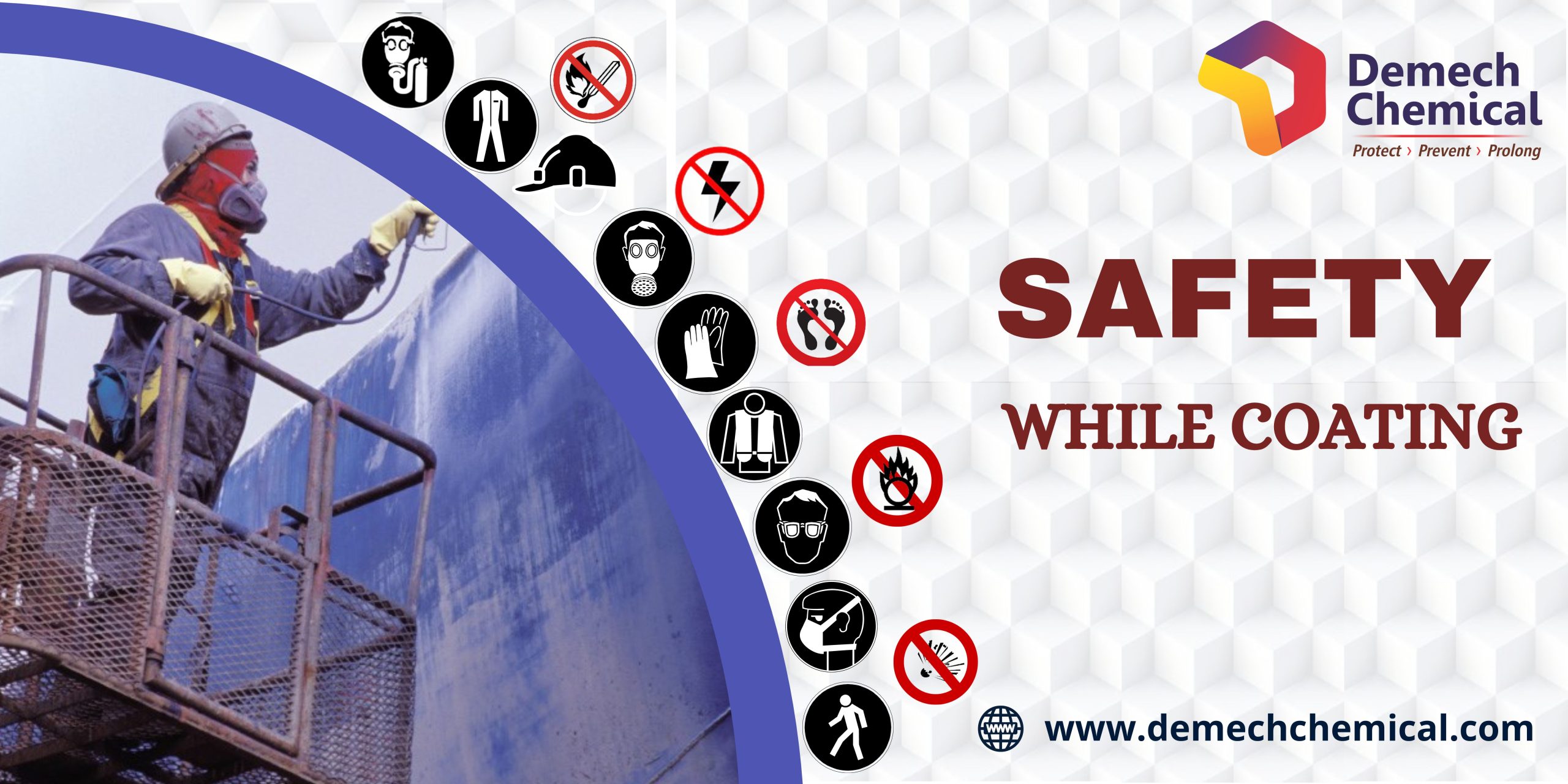
Workers performing surface preparation should wear:
- Abrasive blasting helmets with clean air supply
- Approved respirators or air-fed breathing systems
- Safety goggles or face shields
- Protective gloves
- Heavy-duty protective clothing
- Safety shoes with anti-slip soles
- Hearing protection such as earplugs or earmuffs
Using properly maintained PPE significantly reduces the risk of respiratory illness, eye injuries, hearing damage, and physical injuries.

Safe Operation of Abrasive Blasting Equipment
All blasting equipment should be inspected before use to ensure safe operation.
Safety inspections should include:
- Blast hoses and couplings
- Air compressors
- Pressure regulators
- Nozzles
- Dead-man controls
- Air filtration systems
Only trained and authorized personnel should operate abrasive blasting equipment.

Hazardous Coating Removal
Removing old coatings can expose workers to hazardous substances, especially in older industrial facilities.
Potential hazardous materials include:
- Lead-based paints
- Heavy metals
- Toxic pigments
- Contaminated abrasive media
These materials should never be left at the worksite after removal. Waste must be collected, handled, transported, and disposed of according to applicable environmental and hazardous waste regulations.
Safety When Handling Protective Coating Materials
Protective coatings may contain flammable solvents, combustible chemicals, reactive components, or toxic substances.
Proper material handling is essential to reduce health and fire hazards.
Fire and Explosion Prevention
Many solvent-based coatings release highly flammable vapors during mixing and application.
To minimize fire risks:
- Keep coatings away from open flames and ignition sources.
- Prohibit smoking in coating areas.
- Use non-sparking tools where required.
- Ground and bond containers during solvent transfer.
- Store chemicals in approved containers.
- Follow Safety Data Sheet (SDS) recommendations.
Ventilation Requirements
Adequate ventilation is critical, especially when coating tanks, vessels, pipelines, or other confined spaces.
Proper ventilation helps:
- Maintain solvent vapor concentrations below explosive limits.
- Reduce worker exposure to harmful chemicals.
- Improve air quality during application.
- Lower the risk of fire and explosion.
Ventilation should remain operational throughout the coating process and continue after application until vapors have been safely removed.
Working in Confined Spaces
Confined spaces require additional safety precautions because hazardous vapors can accumulate rapidly.
Essential confined-space safety measures include:
- Continuous atmospheric monitoring
- Mechanical ventilation
- Entry permits
- Emergency rescue procedures
- Communication systems
- Trained standby personnel
Since many solvent vapors are heavier than air, extraction systems should remove vapors from the lowest points of tanks and vessels.
Workers should wear approved supplied-air respirators whenever required by the job risk assessment.
Equipment Safety During Protective Coating
Properly maintained equipment reduces accidents and improves coating quality.
Before beginning work, inspect:
- Scaffolding
- Rigging systems
- Suspended platforms
- Lifting equipment
- Air hoses
- Spray equipment
- Compressors
- Electrical connections
Any defective equipment should be repaired or replaced immediately.
Rigging and lifting operations should only be performed by qualified personnel following approved safety procedures.
Electrical Safety
Protective coating projects frequently involve electrical equipment operating near flammable vapors.
Safety practices include:
- Using explosion-proof electrical equipment where required
- Inspecting electrical cables before use
- Avoiding damaged extension cords
- Ensuring proper grounding of equipment
- Keeping electrical connections dry
Electrical safety significantly reduces ignition risks during coating operations.
Best Practices for Safe Protective Coating Application
To improve workplace safety during coating projects:
- Conduct a job safety analysis before starting work.
- Train employees on hazard identification and emergency procedures.
- Review Safety Data Sheets (SDS) before handling chemicals.
- Wear appropriate PPE throughout the project.
- Maintain proper ventilation in enclosed spaces.
- Inspect equipment before every shift.
- Keep work areas clean and organized.
- Dispose of hazardous waste responsibly.
- Monitor confined spaces continuously.
- Follow manufacturer recommendations for coating materials.
Conclusion
Safety during protective coating application is essential for protecting workers, equipment, and industrial assets. From surface preparation and abrasive blasting to confined-space coating and material handling, every stage of the process requires careful planning, proper PPE, equipment inspections, and strict adherence to safety procedures.
A strong safety culture not only prevents workplace accidents but also improves coating performance, project efficiency, and long-term asset reliability.
Organizations that prioritize safety can significantly reduce operational risks while ensuring successful and compliant coating projects.
Frequently Asked Questions (FAQs)
1. Why is safety important during protective coating application?
Safety prevents workplace injuries, fire hazards, toxic exposure, equipment damage, environmental contamination, and costly production downtime while ensuring successful coating application.
2. What PPE is required during abrasive blasting?
Workers should wear abrasive blasting helmets, supplied-air respirators, safety goggles or face shields, gloves, protective clothing, hearing protection, and safety footwear.
3. Why is ventilation necessary during coating application?
Ventilation removes harmful solvent vapors, maintains safe air quality, reduces fire and explosion risks, and protects workers from chemical exposure.
4. What hazards are associated with solvent-based protective coatings?
Solvent-based coatings may present:
- Fire hazards
- Explosion risks
- Toxic vapor exposure
- Skin irritation
- Respiratory hazards
Proper storage, ventilation, and PPE help minimize these risks.
5. How should hazardous coating waste be handled?
Old coatings, contaminated abrasives, lead-based paint residues, and chemical waste should be collected, stored, transported, and disposed of according to local environmental and hazardous waste regulations.
6. What equipment should be inspected before coating work begins?
Inspect scaffolding, lifting equipment, blast hoses, compressors, spray equipment, electrical systems, platforms, and safety devices before each project.
7. What safety precautions are required in confined-space coating?
Confined-space work should include atmospheric monitoring, mechanical ventilation, entry permits, emergency rescue plans, communication systems, standby personnel, and supplied-air respiratory protection where necessary.
8. How can companies improve safety during protective coating projects?
Companies should conduct risk assessments, train employees, enforce PPE usage, maintain equipment, follow Safety Data Sheets (SDS), monitor confined spaces, and implement comprehensive safety management programs.
Protect Your Assets with DEMECH Chemical Products Pvt. Ltd.
Since 1993, DEMECH Chemical Products Pvt. Ltd. has been delivering advanced corrosion protection, wear-resistant coatings, and maintenance solutions for industries across power, steel, mining, cement, petrochemical, fertilizer, marine, and process sectors.
Our team provides complete support—from problem diagnosis and technical assessment to product selection and professional application—helping industries improve equipment reliability, reduce maintenance costs, and extend asset life.
Need expert guidance for your coating or corrosion challenges?
- Email: enquiry@demechchemical.com
- Phone: +91 8240281662
- WhatsApp: +91 8378996952
- Website: www.demechchemical.com
Contact our technical experts today to request a customized assessment and discover the right protective coating solution for your industrial application.